




In Kenya, football is widely popular and one of the most played sports in the country. From local tournaments to professional leagues, understanding the different football positions is critical for players, coaches, and fans. Each position is pivotal in formulating the team strategy and their overall performance. Below is the in-depth analysis of the most common positions in football played in Kenya, their roles, and the specialization pathway of local players. Download Betwinner APK now and explore more!
Goalkeeper
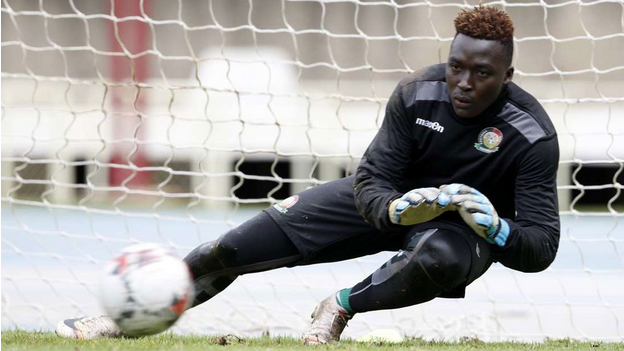
Every football team has a goalkeeper, and every team’s strategy revolves around the player in this position. While goalkeepers in Kenya are selected for their height and agility, this position also requires quick reflexes, critical-spotting, and strong leadership skills. Because goalkeepers make the most critical decisions in a game, players in this position are mostly selected for their ability to stay calm and make immediate decisions when under pressure. The primary responsibility of every goalkeeper is to stop a goal from being scored, and this can be done by catching, parrying, or punching a shot away.
Most Kenyan goalkeepers train in specialized academies, and while focused on improving their reaction time, their training also includes other skills such as aerial control and distribution. Modern goalkeepers in Kenya have also been taught to attack on their feet by initiating a pass to a defender or midfielder, thereby transitioning the team from defense to attack. This makes goalkeepers a critical part in their team’s transition phase.
Defenders
In Kenyan football, defenders are appreciated for their physical attributes, tactical awareness, and game anticipation. Their baseline function is to ensure the opposing teams do not score. Kenyan football, both locally and for international competitions, has placed a strong value on the cohesiveness and tactical organization of its defenses. Each of the defenders is expected to know their role and function for the unit as a whole.
Centre-backs
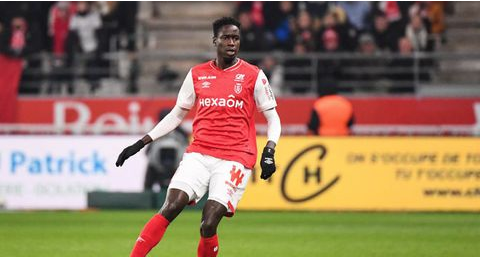
Centre-backs are the main stronghold of the defensive line. Most of the Kenyan defenders are tall and strong and are able to tackle and play aerial duels. Their primary role is to block shots, intercept passes, and ensure opposing forwards are marked. Systematic communication among the centre-backs and with the keeper is the most critical aspect of defensive cohesion and stability.
In Kenya, many of the centre-backs have been able to display their discipline and ability to manage stressful game situations, and many of them, for the strong leadership skills and ability to control the defensive line, served as the captain of the team.
Full-backs
Full-backs are the defenders positioned on the left and right and are expected to contain the opposing team’s wingers. In addition to their defensive duties, they are tasked with attacking responsibilities of overlapping runs and crossing the ball into the attacking zone. Defensive football has changed considerably, and most modern football in Kenya has seen a tactical shift where full-backs play a major role in influencing the game on both sides.
Training programs for Kenyan full-backs and goalkeepers emphasize stamina, speed, and accurate passing. For football, a 3-step approach emphasizes quickness, flexibility, and situation-appropriate triangulation. Players must be able to track back quickly and maintain a defensive equilibrium.
Wing-backs
Wing-backs are a hybrid between full-backs and wingers. Kenyan teams using formations like 3-5-2 rely heavily on wing-backs for width and creativity. These players run along the sides of the pitch, providing crosses and defensive coverage. In Kenyan football, wing-backs are valued for their endurance and tactical flexibility. They are often among the fittest players, capable of providing distance running.
Sweeper
The sweeper, also known as a libero, is a modern defensive role rarely used in Kenyan football. The historical importance in is describing a defensive role with a body of work metaphors. This role requires staying behind the center-backs and clearing loose balls. The backline also needs to be organized and this role is central to achieving that. This position demands exceptional reading of the game and anticipation. In Kenya’s earlier football years, sweepers were common in defensive setups to counter aggressive attacking plays from opponents.
Midfielders
As the game is played in the football pitch, the midfielders decide the jumps and game time. In every Kenyan football team, they are important in closing the gaps between the defense and the attack. Depending on the division of labor in the midfield, some may prioritize the defense while others may favor distribution or creativity in the attack. Kenyan football players on the field in the midfield are recognized for their high work rate, technical abilities, and vision on the ball. The main role of midfielders is to maintain balance in the team’s attack and defense while helping teammates control the pace of the game.
Defensive Midfielder
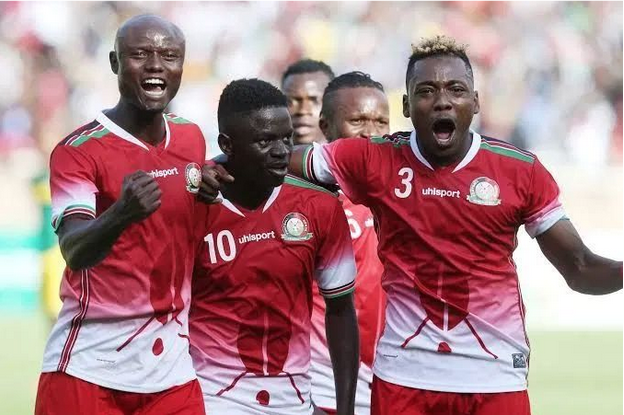
Kenya offensive players and coaches refer to the defensive midfielder as the “anchor”. Defensive midfielders are the players whose main job is to shield the defense, break up opposition’s attack, and win back the ball. In the Kenyan game, the defensive midfielders need to be able to tackle strongly and make sound passes, often passing the ball efficiently to transition into attack.
Kenyan coaches for this role focus on positioning the players and movement patterns for transition of play while remaining in positional balance of your team as they are the only players in the balance between defense and attack in a transition. Defensive midfielders carry specific responsibilities, helping create space for attackers and assisting defensively to prevent the team from scoring against them. Their position on the field makes them vital to a team’s success, as they also play a key role in intercepting passes and recovering possession.
Central Midfielder
In the Kenyan game, the central midfielder’s primary role is to shield the backline and tackle to win the ball, combine with attacking players to move the ball, and orchestrate the flow of the game. Midfielders often act as the engine, ensuring fluid transitions between defense and attack. Central midfielders may also be required to control the match single-handedly during critical situations. It is also expected of central midfielders in Kenya to perform advanced midfield roles with creativity to break opposition defense.
Due to the over-reliance of Kenyan teams on a central defender or centre-back pairing, the central midfielder provides the essential link between lines. Positional training for this role focuses on ball control, passing accuracy, playmaking, and tactical understanding. Their defensive responsibilities include marking, tackling, and maintaining team shape, while offensively they assist in creating scoring opportunities and moving forward into the penalty box when needed.
Attacking Midfielder
In Kenya, attacking midfielders truly are the key playmakers. Their responsibilities include crossing the ball, executing a dribble, and scoring a long shot to a goal. In the final third of the pitch, attacking midfielders in Kenya are encouraged to think and be creative. In local leagues, attacking midfielders are usually the most skilled, able to quickly see a situation and open a defense. They provide goal-scoring opportunities through clever passing and dribbling, often acting as the focal point in the team’s attack.
This important position demands creativity and accuracy, with players frequently cutting into the penalty box and shooting from range. Many of Kenya’s talented attacking midfielders dream of reaching tournaments like the FIFA World Cup or the UEFA Champions League, proving that strong playmaking skills can help their teams win games.
Central Attacking Midfielder
A central attacking midfielder (CAM) plays just behind the forwards, and this position is essential in leading the attacking play and aiding in the scoring process. In Kenya, the CAM typically links the midfield and the strikers and does most of the creative thinking. Coaches expect these players to be space exploiters with the ability to make through passes, and score every now and then.
In modern formations, the CAM works with 11 players to organize goal-scoring opportunities. Their main job is to assist the scorer, maintain fluid transitions, and add variety to wing play. Because of their specific responsibilities, CAMs in Kenya’s national team and clubs such as Manchester United or local equivalents inspire young players to understand positions explained across professional football.
Playmaker
In Kenya, playmakers are those who, during the offensive phase, can lead the rest of the players with their vision and intelligence. They are the most strategic of players and control the rest. Many of the Kenyan academies have started to train young players with the aim to become playmakers through sharpening their passing range and speeding up their decision-making.
Playmakers can create space in tight areas, assist dribblers, and deliver accurate balls to forwards or wingers. They are the tactical heart of the side, controlling the pace of the game. Whether in local leagues or the Champions League, playmakers are admired for their creativity and consistency in creating scoring opportunities.
Forwards
A forward’s main job is to score goals and create attacking plays. Kenya has exceptionally skilled forwards who deliver with pace and accuracy. They can be strikers, wingers, or even secondary attackers. These players on the field provide the attacking spark necessary for a team’s success. The forward is the focal point of the team’s attack, always looking for ways to exploit spaces offensively while contributing defensively when required.
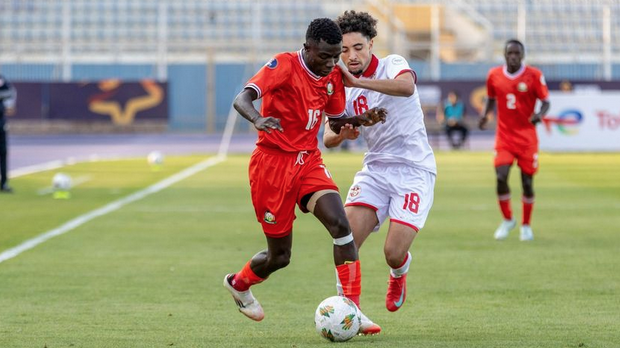
Striker
Primarily, a striker has the task of scoring, and in Kenya, strikers are taught how to identify and exploit the weak points in the opposing defense while strategically positioning their bodies in the scoring area. Successful Kenyan strikers enjoy a good finish with bold and calculated movement. Strikers are responsible for converting opportunities and spearheading the offensive onslaught.
They must read the game well, react quickly inside the penalty box, and act as a reliable scorer. Strikers often train to cut inside from wide areas or combine with a teammate to set up scoring chances. The role requires being physically strong, maintaining composure, and knowing how to take advantage of any defensive mistake — all vital traits that decide who can represent Kenya in international competitions like the World Cup.
Wingers
Wingers operate on the flanks and offer width in an attack. In Kenyan football, wingers are fast and proficient in making accurate crosses and can cut inside to stretch the opposition’s defense. Wingers are taught the importance of consistent crossing and creating scoring opportunities, alongside dribbling and pace.
In the football pitch, the right-back or full-back often supports the winger, ensuring effective wing play. These two positions work together defensively and offensively to stop opposition wingers while advancing forward. Kenyan wingers learn to maintain control, balance, and rhythm — essential for modern football’s high-speed transitions.
Forwards (General Roles)
Forwards in Kenya are also expected to show flexibility in their roles. Some can alternate between striker and winger positions, which helps Kenyan teams adapt to different tactics. Kenya’s modern forwards also engage in pressing and, more recently, defending, an advanced tactic for the evolution of attacking play in Kenyan football.
Whether playing as a centre-back target or wing-back attacker, forwards must coordinate with teammates and adjust based on the position on the field. The modern Kenyan forward demonstrates adaptability, helping win games through creative playmaking and consistent finishing.
Understanding Football Positions and Numbers in Kenya
Positions in football come with specific, traditionally associated numbers. In Kenya, the numbers are the same as the international standards, whereby the keeper wears number 1, defenders 2–6, midfielders 7–11, and forwards are 9 or 10. These numbers show tactical understanding and assist in team communication.
Each of the 11 positions on the football pitch has specific responsibilities. The goalkeeper serves as the last line of defense, often using their hands to stop the team from scoring, while defenders and midfielders manage transitions and control the pace of the game. Kenyan coaches work with formations like 4-4-2, 4-3-3, and 3-5-2 depending on strategy. Understanding these systems is part of a complete guide to mastering football tactics.
Development of Football Positions in Kenya
The development of football positions in Kenya demonstrates local playing styles alongside global trends. During the first few defensive formations were predominant. Compared to the prior years, modern football in Kenya now has priority and more balance towards an attack. Football academies in Kenya, like those in Nairobi and Mombasa, help players train in roles based on their physical and technical strengths. Position-specific development is obtained through Kenyan Premier League clubs adopting international tactical play.
Tips for Young Footballers to Choose Their Best Position
Choosing the right position for young footballers in Kenya is based on one’s individual strengths and playing style. Players who have fast reflexes, for example, might want to consider the position of goalkeeper. Meanwhile players who have high levels of stamina and speed might want to try the positions of wingers or full-backs.
Coaches suggest players should try and play as many different positions during a practice before one is chosen. This will help the player gain a well rounded knowledge of the game, which in turn allows the player to better adapt and perform.
Conclusion
The various football positions are the foundation of the sport in Kenya. Each position, whether a goalkeeper or striker, requires dedication and different skill sets. The development of the structured advancement programs in conjunction with coaching will improve the ability of Kenyan football players as the sport continues to flourish in the country.
FAQ
What are the main football positions in Kenya?
In Kenya, the main football positions are goalkeeper, defenders, which are centre backs, full backs, wing backs, and sweeper; midfielders, consisting of defensive, central, attacking, and playmaker; and forwards, which are strikers and wingers.
How do Kenyan players specialize in different positions?
Kenyan players specialize through training in football academies and clubs. Coaches consider attributes such as speed, strength, and vision when deciding what role best fits the player.
Which position is most popular among young footballers in Kenya?
Most young footballers prefer attacking positions, especially striker and winger, as these roles are associated with scoring and are thus more visible.
How are football positions taught in Kenyan academies?
In football academies, positions are taught through training exercises that aim at tactical comprehension of the game along with dribbling, passing, movement, and other pre-defined activities. During initial practice, players are encouraged to rotate positions to enable them identify the position they are most comfortable with.
What skills are needed for a goalkeeper in Kenya?
A Kenyan goalkeeper must have the ability to quickly react in different game situations, stop shots and communicate effectively. During training the goalkeeper must also display confidence when handling a group of players and distributing the ball, as these are vital elements of leadership.

